Chargebacks were created as a consumer protection mechanism, not as a shortcut for getting free products or reversing purchases simply because someone changed their mind. When they work properly, they give cardholders a way to challenge unauthorized transactions, duplicate charges, undelivered purchases, and certain other billing problems. The trouble begins when that protection is manipulated, misunderstood, or turned into a money-making scheme.
The phrase chargeback scams can actually describe several different situations. A buyer may deliberately dispute a legitimate purchase after receiving the product. A scammer may convince someone that they can recover previously lost money by filing chargebacks on their behalf. In other situations, a consumer may mistakenly dispute a genuine transaction because the billing descriptor looks unfamiliar, a family member made the purchase, or a forgotten subscription renewed automatically.
That distinction matters. From an investigative standpoint, calling every disputed transaction “fraud” is simply inaccurate. Visa describes friendly fraud, also called first-party misuse, as a situation where a cardholder disputes a legitimate transaction made by the cardholder or someone in their household. Mastercard has similarly noted that first-party disputes can be intentional or accidental, sometimes arising from transaction confusion, forgotten subscriptions, household purchases, or unresolved customer-service problems.
What makes this area especially complicated is that the bank reviewing the dispute normally sees only part of the story at first. The cardholder has one version, the merchant has transaction records, and the payment network has its own evidence and rules. A delivery confirmation, login history, cancellation request, refund record, device identifier, or even the wording used on the original checkout page can change the outcome.
Our investigation found… the strongest chargeback cases usually involve documentation rather than emotion. Whether you are a consumer trying to recover money or a legitimate seller defending a transaction, the question eventually becomes the same: what can actually be proved?
What Is a Chargeback?
A chargeback is a reversal of a payment initiated through the cardholder’s bank or card issuer after a transaction is disputed. It is different from an ordinary merchant refund. With a refund, the seller voluntarily sends the money back. With a chargeback, the payment dispute moves through the banking or card-network system and the merchant may be required to provide evidence supporting the transaction.
Visa explains that disputes can result from genuine fraud, unrecognized purchases, processing errors, authorization problems, goods not received, products that were not as described, and other customer complaints. After the evidence is reviewed, the issuing bank decides whether the disputed payment should remain reversed or whether the transaction was legitimate.
That mechanism is valuable. If someone steals your card details and buys something without permission, you should not be expected to simply absorb the loss. The same principle applies when a seller charges for something that was never delivered as agreed.
U.S. consumers also have specific protections under the Fair Credit Billing Act and Regulation Z. The Consumer Financial Protection Bureau states that certain credit-card billing errors can include unauthorized charges and charges for goods or services that were not accepted or delivered as agreed. Consumers generally need to send a written billing-error notice within 60 days after the charge appears on the relevant statement to preserve certain federal protections.
That legitimate process should not be confused with deliberately making a false claim.
Where a Legitimate Chargeback Becomes Chargeback Abuse
The clearest example is simple: someone buys a product, receives exactly what was ordered, and then tells the bank that the purchase was unauthorized or that the product never arrived.
If the buyer keeps both the merchandise and the reversed payment, the merchant may lose the sale, the product, shipping expenses, processing costs, and potentially a dispute fee. That is why payment companies commonly refer to deliberate abuse of legitimate disputes as friendly fraud or first-party misuse.
The word “friendly” can sound almost harmless, which is misleading. Some cases really are innocent misunderstandings. Others appear much more deliberate.
Imagine a customer orders a $350 electronic device. Tracking shows delivery. The package was signed for at the shipping address entered during checkout. The customer’s account shows several visits after delivery, perhaps including registration of the device. Two weeks later, the customer disputes the charge as “merchandise not received.”
None of those individual facts automatically proves fraud. Packages can be misdelivered, signatures can be incorrect, accounts can be compromised, and tracking information is not perfect. Taken together, though, those records give an investigator more reason to examine the claim closely.
That is an important principle throughout this topic: patterns carry more weight than isolated signals.
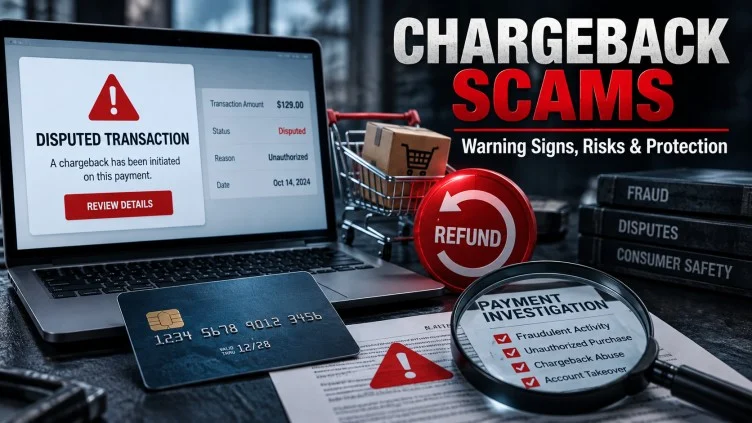
Not Every False-Looking Dispute Is Actually a Scam
This is where chargeback discussions often become unfair.
A customer sees “XYZ HOLDINGS 3829” on a statement and has no idea what it is. They remember ordering from a store called “BrightHome.” They report the mysterious transaction, only to discover later that XYZ Holdings is BrightHome’s legal billing name.
Technically, the purchase was legitimate. The dispute was still genuine from the customer’s perspective.
The same thing happens when children make in-app purchases, spouses use shared cards, subscriptions renew months after the original signup, preorder purchases appear under unfamiliar descriptors, or a retailer splits one purchase into multiple transactions.
Mastercard reported in 2026 that merchants and issuers estimated roughly one in five disputes were associated with first-party fraud, while also emphasizing that this category includes both deliberate abuse and genuine transaction confusion. It also reported that many consumers have disputed transactions they later recognized as legitimate.
That is why I would be skeptical of anyone who claims they can identify a “chargeback scammer” solely because a customer opened a dispute. You need context.
The “Item Never Arrived” Pattern
One of the most common dispute categories revolves around delivery.
A genuine consumer might order something that gets lost in transit, delivered to the wrong building, stolen after delivery, or marked delivered prematurely. Those situations happen constantly and deserve proper investigation.
The abuse version looks different. A buyer receives the order but files a non-receipt dispute anyway, betting that the seller will not have strong enough delivery evidence to challenge it.
Stripe published an analysis in July 2026 based on evidence from one million disputes over a 16-week period and described “product not received” disputes as its most common non-fraud dispute category. The analysis looked at evidence such as delivery confirmation and digital content-consumption records when evaluating merchant outcomes.
During testing, we observed… how easily a weak evidence trail can turn an ordinary delivery problem into an impossible argument. A tracking page saying “delivered” is useful, but an address match, delivery photograph, signature, customer messages, order history, and timestamped account activity can provide much stronger context.
For buyers, the lesson is equally useful: preserve your own evidence. Photograph damaged parcels, save tracking records, keep delivery notifications, and contact the merchant promptly rather than waiting weeks and trying to reconstruct the situation later.
The “I Never Authorized This” Claim
Unauthorized transaction disputes are one of the most sensitive categories because real payment-card theft remains common.
If your card information was genuinely stolen, contact the issuer quickly. The FTC recommends immediately reporting unauthorized credit-card transactions to the card issuer and asking about reversing the charge.
An abusive version occurs when the actual buyer later denies authorizing the payment.
Merchants may respond with information connecting the transaction to the buyer, such as previous purchase history, account logins, matching billing and shipping information, device information, IP records, email confirmations, authentication results, and proof that the product or service was used.
Visa specifically discusses transaction information such as login records, IP addresses, device IDs, and delivery confirmations as examples of data that can help identify legitimate purchases and reduce friendly-fraud disputes.
Again, none of this means that an IP address or device match automatically proves authorization. Shared households, compromised accounts, VPNs, reused devices, and account takeover can complicate the picture. A responsible investigation weighs several pieces of evidence rather than grabbing the first convenient explanation.
Subscription Chargebacks Deserve Extra Scrutiny From Both Sides
Recurring billing creates some of the messiest disputes I see.
A customer accepts a trial without realizing that it automatically converts into a paid subscription. Six months later, they notice recurring payments and dispute every one of them. The merchant responds by pointing to terms displayed during signup.
Who is right?
Sometimes the consumer genuinely missed clearly presented terms. Sometimes the business buried renewal language in tiny text, used a preselected checkbox, or made cancellation unnecessarily difficult. The existence of a terms-and-conditions page does not automatically tell us whether the transaction was fair.
The FTC advises consumers to check whether free trials automatically convert to paid subscriptions, understand how cancellation works, and dispute unauthorized charges when a company will not provide an appropriate refund.
When investigating subscription disputes, I look closely at what the consumer saw before payment, not merely at the company’s policy page after the problem occurred. Was the recurring price visible? Was the renewal date understandable? Was cancellation reasonably accessible? Did the company send confirmations? Did the consumer attempt to cancel?
Those details are much more useful than a blanket statement that “the customer agreed to the terms.”
Chargeback Recovery Scams: When Victims Get Targeted Twice
There is another type of scheme consumers should recognize.
Someone loses money to a questionable investment, fake shopping site, impersonation scam, or other fraud. A few weeks later, another person contacts them claiming they can recover the money through a special chargeback process.
The supposed recovery specialist might call themselves a financial investigator, dispute expert, legal consultant, cyber-recovery agent, or government representative. They promise an unusually high success rate, then request an upfront “case fee,” “processing charge,” “administrative payment,” or percentage of the supposedly recoverable funds.
This should immediately raise questions.
The FTC warns specifically about refund and recovery scams targeting people who have already lost money. According to the agency, fraudsters may pose as government agencies, consumer organizations, or law firms and ask for upfront fees or sensitive financial information supposedly needed to recover the victim’s money.
There is an uncomfortable psychological reason this works. People who have recently lost money are often searching urgently for a way to undo the damage. The recovery scammer does not have to create hope from nothing; the victim is already looking for it.
That makes promises such as “guaranteed chargeback approval” particularly dangerous.
No outsider can honestly guarantee how a bank will decide a dispute.
How Chargeback Scammers Manipulate People
Most scams around payment disputes rely less on technical sophistication than on psychology.
One tactic is certainty. The person claims they know an “inside method” banks do not want consumers to know.
Another is urgency. They tell the victim that only a few hours remain before the money becomes permanently unrecoverable.
Then comes authority. Their website may feature legal-looking language, bank logos, fake registration numbers, testimonials, or photographs of supposed investigators.
Finally comes escalation. Once the victim pays the first fee, another problem suddenly appears. There may be a “release fee,” “tax,” “verification payment,” or “international transfer charge.”
The FTC has documented the same basic behavior in recovery scams: people are approached after previous losses, promised assistance, and then asked for money or sensitive information before any supposed refund can be released.
Themakerdepot researchers noticed… that the strongest warning sign is often not a polished website or an unusual company name but the payment sequence itself. If someone claims they are about to return your money but first requires cryptocurrency, gift cards, a wire transfer, or another difficult-to-reverse payment, the arrangement deserves serious skepticism.
A Practical Example: Genuine Dispute or Chargeback Scam?
Consider two buyers who both dispute a $120 clothing order.
Buyer A contacts the retailer after tracking has not updated for three weeks. The retailer provides no useful response. The buyer saves emails, tracking screenshots, and the order confirmation before eventually contacting the card issuer.
Buyer B receives the clothing, emails the retailer asking to exchange one item, and later files a dispute claiming the entire purchase was unauthorized. The merchant submits the customer’s earlier email discussing the order, tracking confirmation, and account history.
Both transactions created chargebacks. Their factual patterns are completely different.
This is why raw chargeback counts alone tell you surprisingly little about whether a business or customer is dishonest.
A merchant with many disputes could have poor shipping, confusing billing descriptors, aggressive subscriptions, terrible customer support, or genuine fraud problems. A consumer with multiple disputes might be abusing protections, but they could also have experienced account compromise or dealt repeatedly with problematic sellers.
Context remains essential.
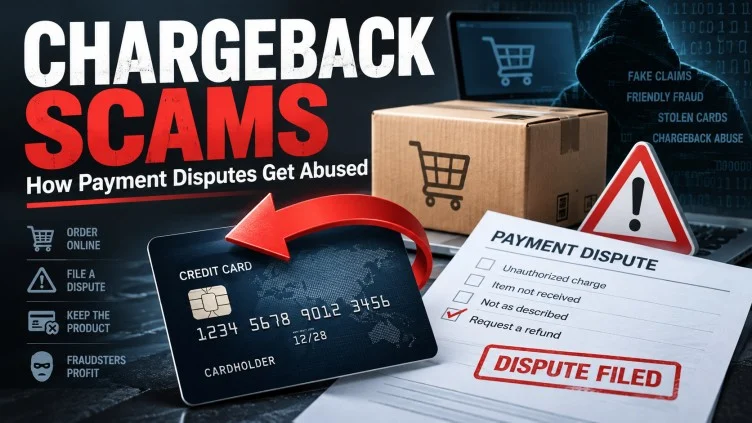
How to Verify a Charge Before Disputing It
Before filing a dispute, take a few minutes to establish exactly what happened. This protects legitimate consumers because accurate disputes are easier to explain, and it also reduces accidental friendly fraud.
- Identify the merchant descriptor. Search the exact wording appearing on your bank statement. Compare the amount and date against recent receipts, email confirmations, app-store purchases, and household spending.
- Check whether someone else had permission to use the card. Ask family members or authorized users before declaring the transaction unauthorized. This sounds basic, but household purchases are a recognized cause of first-party disputes.
- Review subscriptions and trials. Search your email for the merchant name, product name, “subscription,” “renewal,” “trial,” “receipt,” and “invoice.” Look at when you originally signed up and what cancellation conditions were presented.
- Check fulfillment records. For physical orders, review tracking carefully. For digital products, check whether the account was activated or content was accessed. For services, review appointments, reservation records, correspondence, and cancellation history.
- Contact the merchant through independently verified details. Do not rely only on a phone number contained in a suspicious text or email. Explain the transaction and ask for an invoice or clarification.
- Preserve evidence before escalating. Save screenshots, emails, tracking records, policy pages, receipts, cancellation confirmations, chat logs, and photographs. Websites and account pages can change after a dispute begins.
- Contact the issuer promptly if the problem remains unresolved. Follow the issuer’s instructions precisely. In the United States, certain credit-card billing-error protections depend on timing, including the 60-day written notice period described by the CFPB and FTC.
The important part is not to invent a stronger story than what actually happened. If you made the purchase but the seller failed to deliver, say that. Do not choose “unauthorized transaction” simply because it sounds more serious.
Warning Signs of a Chargeback Recovery Scheme
Be cautious when a supposed recovery company contacts you unexpectedly after you have already lost money. Legitimate professional services can exist in areas such as legal representation and financial disputes, but unsolicited contact combined with unrealistic guarantees changes the risk calculation considerably.
I would be especially skeptical when the company guarantees a successful recovery, says it has a special relationship with banks, claims the government has already located your money, demands fees before releasing recovered funds, asks for online-banking passwords, or insists that payment must be made by cryptocurrency, gift card, wire transfer, or another difficult-to-reverse method.
A second warning sign is secrecy. Fraudsters sometimes tell victims not to speak directly with their bank because the “case could be damaged.” That makes little sense when the bank itself is responsible for handling the card dispute.
Another red flag is coaching the victim to lie.
If someone tells you to describe a transaction as unauthorized when you actually authorized it, stop. A legitimate adviser should help you document the facts, not manufacture new ones.
What Consumers Should Do After a Suspicious Purchase
The safest response depends on what actually happened.
For unauthorized card use, notify the issuer as soon as possible and consider whether your card credentials or account were compromised. Change relevant passwords, enable multifactor authentication where available, and review recent transactions for smaller test charges that may have gone unnoticed.
For goods that never arrived, first preserve the merchant’s promised delivery timeframe and your order records. Contact the seller. If the issue is not resolved, speak with the card issuer about the appropriate dispute category.
The CFPB recommends contacting the seller first when seeking a refund for defective or problematic goods or services and contacting the credit-card company about available dispute options if the seller does not resolve the problem.
For suspected refund-recovery scams, do not send additional money simply because the person claims another fee will unlock your refund. Verify organizations independently, using contact information you find yourself rather than numbers or links supplied by the person contacting you. You can read more about CyberGhost VPN Review (2026)
What Merchants Can Learn From Chargeback Patterns
Businesses sometimes concentrate so heavily on fighting disputes that they miss what those disputes are telling them.
If customers repeatedly say they do not recognize the company’s billing descriptor, change the descriptor.
If buyers repeatedly dispute subscriptions, examine the signup and cancellation experience.
If “item not received” complaints cluster around one shipping partner, warehouse, or region, investigate fulfillment rather than assuming customers are lying.
If buyers contact the bank because support emails go unanswered for ten days, the problem is partly operational.
Payment networks increasingly emphasize preventing disputes before they become chargebacks. Visa describes real-time transaction information, clearer purchase details, automated pre-dispute resolution, and stronger data sharing as ways to reduce unnecessary chargebacks. Mastercard similarly promotes tools designed to clarify transactions and resolve problems before formal chargebacks occur.
From a consumer-safety perspective, that makes sense. A fair system should reduce both merchant abuse and false consumer claims rather than automatically assuming one side is always correct.
Trust Indicators I Would Look for in a Dispute or Recovery Service
If you are considering professional help with a substantial financial dispute, verify who you are dealing with independently.
Look for a real legal entity, traceable business address, identifiable people behind the operation, understandable fees, realistic promises, and written terms explaining exactly what service is being provided.
Check whether professional credentials can be verified directly with the relevant regulator or licensing body. If someone claims to be an attorney, investigator, government employee, or regulated financial professional, do not accept a badge image or certificate uploaded to their own website as proof.
Search the organization name together with terms such as “complaint,” “lawsuit,” “reviews,” and “scam,” but interpret results carefully. Reviews are evidence to examine, not a final verdict. Both fake positive reviews and malicious negative reviews exist.
The strongest trust indicator is usually consistency. The company’s legal name, payment recipient, address, domain, staff identities, terms, and explanation of its service should make sense together. You can read more about Is Lumavista Legit or a Scam?
Can Filing a False Chargeback Have Consequences?
Consumers should not treat the dispute button as a risk-free refund mechanism.
A merchant may submit evidence challenging the claim. A temporary credit can be removed if the issuer ultimately determines that the transaction was legitimate. The CFPB explains that if a card issuer concludes that the disputed bill was correct, it must tell the consumer why and explain what amount remains due.
Merchants may also restrict accounts associated with repeated abusive disputes, particularly when there is evidence linking those transactions to legitimate orders.
At the more serious end, deliberately making false representations for financial gain can create legal issues depending on the facts and jurisdiction. That should not frighten genuine victims away from legitimate disputes, though. Federal rules specifically protect good-faith assertions of billing errors, and the dispute system exists because consumers genuinely need it.
The sensible boundary is simple: report what actually happened.
Risk Assessment: When Should You Be Most Concerned?
A single confusing charge should not automatically send someone into panic mode. Start by identifying it.
The risk increases when several unusual elements appear together: an unknown transaction, no recognizable merchant information, repeated charges, an inaccessible seller, no valid order record, attempts to obtain additional sensitive information, pressure to pay recovery fees, or instructions to misrepresent facts to a bank.
Likewise, merchants evaluating suspected friendly fraud should resist relying on one signal. A delivery scan alone may not tell the entire story. Stronger evidence combines transaction records, customer communication, fulfillment information, authentication data, prior account history, and the specific reason given for the dispute.
That comparison-based approach produces much fairer conclusions.
Expert Verdict: Chargebacks Are Protection, but the Protection Can Be Abused
Chargebacks themselves are not scams. They remain one of the most important protections available to cardholders when transactions are unauthorized, incorrectly processed, or when goods are not delivered as agreed.
The problem is abuse.
Some customers deliberately dispute legitimate purchases to obtain money back while retaining goods or services. Others make genuine mistakes because they do not recognize a billing descriptor or forget about a subscription. At the same time, entirely separate scammers exploit people who have already suffered financial losses by promising guaranteed chargeback or recovery services in exchange for more money.
Those situations should never be lumped together.
After looking at current guidance from the CFPB, FTC, Visa, Mastercard, and payment-industry sources, my view is that evidence remains the best protection on both sides. Consumers should document purchases, cancellations, deliveries, and merchant communications. Merchants should maintain transparent billing descriptors, clear subscription terms, reliable delivery records, responsive support, and accurate transaction data.
If you genuinely did not authorize a payment or paid for something that was never delivered as agreed, use the protections available to you and act quickly. If someone is coaching you to invent facts, promising a guaranteed chargeback, or requesting another payment before they can supposedly release recovered money, that is a very different situation and deserves immediate scrutiny.
The chargeback system works best when it does what it was designed to do: correct legitimate payment problems without becoming another opportunity for fraud.