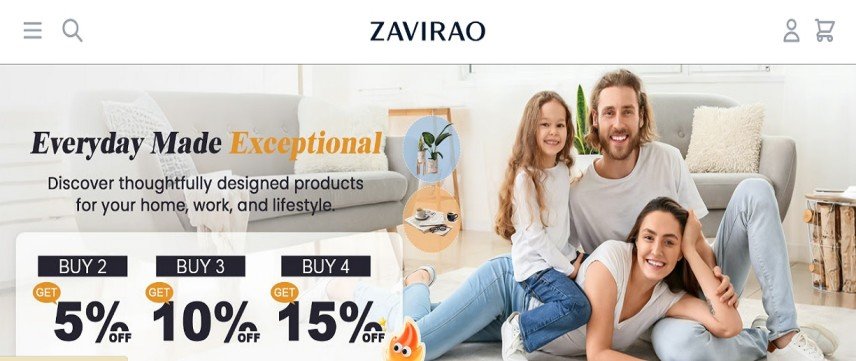
Online shopping has become second nature for most of us. A few taps, a quick checkout, and the product arrives at the doorstep. That convenience has also created fertile ground for fraudsters who know exactly how modern shoppers behave. They understand urgency, impulse buying, and the psychology behind a “limited-time deal.”
Over the last few years, fake shopping websites have evolved well beyond the obvious scam pages filled with spelling errors and broken layouts. Many now look polished, professionally designed, and convincing enough to fool even experienced online shoppers.
That’s what makes them dangerous.
Our investigation found that fraudulent e-commerce sites increasingly mimic legitimate retail experiences with alarming precision. They borrow product photos, duplicate customer reviews, copy return policies from established brands, and even display fake trust badges designed to reassure visitors.
The uncomfortable truth is this: many people only realize something is wrong after their payment is gone.
This guide breaks down how fake shopping websites operate, the patterns fraud analysts watch for, and the practical steps consumers can take before entering payment details.
Why Fake Shopping Websites Are So Effective
The success of fraudulent shopping websites doesn’t come down to technical sophistication alone. It often comes down to behavioral manipulation.
Scammers know that online shoppers tend to make faster decisions when certain triggers are present:
Scarcity messaging
“Only 3 left in stock.”
“Sale ends in 10 minutes.”
“Flash clearance today only.”
During testing, we observed that many suspicious shopping websites use countdown timers that reset when the page is refreshed. This is a classic pressure tactic.
Legitimate stores sometimes run timed promotions, but fake stores often use artificial urgency to prevent careful evaluation.
Emotional pricing
A luxury watch listed for $39.
Designer sneakers discounted by 92%.
A high-end gaming console selling below wholesale cost.
These offers target emotional decision-making. The shopper sees the perceived opportunity before stopping to ask whether the pricing makes economic sense.
Trickymagazine researchers noticed that many fraudulent retail domains rely heavily on “too good to ignore” discounts rather than realistic promotional pricing.
Real businesses need margins to survive.
Scam websites only need enough victims before disappearing.
The New Face of Fake Shopping Websites
Years ago, fake stores were easier to spot.
They often had poor grammar, low-quality graphics, and incomplete pages.
That’s changed.
Today’s fake e-commerce operations often use prebuilt store templates that look nearly identical to legitimate Shopify or WooCommerce stores.
Some include:
Professional product photography
Live chat widgets
Detailed FAQ sections
Social proof popups
Refund policies
SSL certificates
This creates a false sense of legitimacy.
One of the most common misconceptions among shoppers is assuming that a website looks trustworthy because it has a padlock icon in the browser.
That’s a misunderstanding worth correcting.
HTTPS encryption only means data is encrypted during transmission.
It does not confirm the store is honest.
A scammer can easily secure an SSL certificate.
The First Red Flag: The Domain Name
When evaluating an unfamiliar online store, the domain often tells an important story.
Strange brand-domain mismatches
A website claiming to be an established fashion retailer might operate under a domain like:
luxurydeals-center.shop
bestdiscountmall.store
officialbrandclearance.xyz
That mismatch matters.
Legitimate businesses usually invest in coherent branding.
If the website name, logo, and domain don’t align naturally, it deserves scrutiny.
Recently registered domains
Our investigation found that many fake shopping websites are launched quickly, operate for a short period, and vanish once complaints accumulate.
Checking domain age can reveal useful context.
A site claiming “trusted by customers since 2012” but registered two months ago presents an obvious inconsistency.
WHOIS lookup tools can help verify this.
That said, domain age alone isn’t definitive.
New businesses launch every day.
The real concern is when a newly registered domain combines with other warning signs.
Excessive keyword stuffing in the URL
Fraudulent domains often attempt search visibility through keyword-heavy naming.
Examples might include:
cheapnikeclearancesaleonline.com
discountluxurybagsoutlet.shop
These often signal imitation retail schemes.
Real brands rarely structure domains this way.
Product Pricing That Defies Logic
Pricing analysis is one of the fastest ways to assess credibility.
Experienced fraud researchers often compare product pricing across multiple established retailers.
If a product normally sells for $300 everywhere else but appears for $49 on one unknown site, skepticism is warranted.
There are legitimate reasons for lower pricing:
Seasonal clearance
Refurbished stock
Regional pricing differences
Promotional bundles
But extreme discounts without explanation often point to risk.
During testing, we observed suspicious websites listing identical markdown percentages across every product category.
That’s unusual.
Real inventory pricing varies.
Uniform “80% off everything” promotions are often fabricated.
Copy-Paste Product Descriptions
One subtle but revealing indicator involves product content quality.
Fake shopping sites frequently scrape descriptions from legitimate retailers or marketplaces.
Signs include:
Formatting inconsistencies
References to another retailer’s brand name
Mismatched sizing charts
Broken image galleries
Incomplete technical specifications
Trickymagazine researchers noticed several suspicious stores using luxury product listings with descriptions copied directly from authentic manufacturer websites, yet paired with unrealistic pricing.
That contradiction matters.
If a store claims exclusive inventory but offers generic copied descriptions, caution is reasonable.
The Contact Page Test
One of the simplest verification methods is checking whether the business appears reachable.
A legitimate retailer usually provides multiple contact methods:
Customer service email
Phone number
Physical address
Business registration details
Response channels
Fake websites often offer only a generic contact form.
Or worse, they provide fabricated addresses.
How to verify
Search the listed address independently.
Does it lead to a real commercial location?
Is it a residential property?
Does it point to an unrelated office building?
Our investigation found several suspicious shopping websites using random addresses copied from real businesses.
A quick map search exposed the inconsistency immediately.
Phone numbers are equally revealing.
If customer support lines go unanswered repeatedly, or if the number format appears invalid, that’s worth noting.
Customer Reviews: What to Look For
Reviews are often manipulated.
The challenge is knowing how.
On-site reviews can be fabricated
A website displaying hundreds of glowing five-star reviews means very little if those reviews exist only on that website.
Scammers control what appears there.
Common fake review patterns include:
Repetitive wording
Generic praise
No critical feedback
Identical formatting
Unnatural timestamps
Example:
“Great product! Fast shipping! Highly recommend!”
Repeated dozens of times.
Real customer feedback tends to be messier, more specific, and more varied.
Look externally
Search for independent discussion.
Try:
“[website name] reviews”
“[website name] complaints”
“Is [website] legit”
Forums, consumer complaint boards, and community discussions often reveal patterns.
Still, balance is important.
A few complaints don’t prove fraud.
Even legitimate businesses receive criticism.
The goal is identifying consistent behavioral patterns.
Payment Methods Reveal a Lot
Payment infrastructure often exposes website credibility.
Legitimate retailers usually offer secure, mainstream payment options:
Credit cards
PayPal
Recognized payment gateways
Suspicious websites often push less reversible methods.
These include:
Bank transfers
Cryptocurrency-only payments
Gift cards
Direct wallet transfers
Why?
Because they’re harder to dispute.
If a site actively discourages protected payment methods, that’s a serious concern.
During testing, we observed several questionable stores redirecting users away from standard checkout toward manual payment instructions.
That’s highly irregular for established e-commerce operations.
Shipping Policies That Don’t Add Up
Many fake stores include shipping pages because they know shoppers expect them.
The issue is often in the details.
Watch for:
Vague delivery estimates
No carrier information
Contradictory timelines
Poorly copied legal language
A policy claiming both “delivery within 3–5 business days” and “international shipping may require 30–45 days” without context suggests careless assembly.
Real retailers usually present clearer logistics.
Return Policies Designed to Discourage Complaints
This is one of the more sophisticated tactics.
Some suspicious sites technically offer returns, but the terms are intentionally impractical.
Examples include:
Customer pays all international return shipping
Return requests accepted only within 24 hours
Items must remain unopened for return eligibility
Restocking fees exceeding product value
These policies create the appearance of legitimacy while making refunds unrealistic.
Our investigation found that many problematic shopping sites include return language copied from larger retailers, but with subtle modifications that heavily favor the seller.
Reading the fine print matters.
Website Design Can Be Deceptive
Professional design no longer guarantees legitimacy.
Modern scam operators can deploy polished storefront templates in minutes.
Still, there are clues.
Look for internal inconsistencies
A beautifully designed homepage paired with:
Broken links
Missing product categories
Placeholder text
Blank policy pages
Stock images unrelated to products
These inconsistencies often suggest rushed deployment.
Trickymagazine researchers noticed that fake stores often prioritize visual appeal on landing pages while neglecting deeper site functionality.
Click beyond the homepage.
That’s where weaknesses appear.
Social Media Presence: Quality Over Existence
Some shoppers assume a linked social media profile confirms legitimacy.
Not necessarily.
Fake stores increasingly create basic social pages to appear authentic.
Evaluate:
Posting history
Follower engagement
Comment quality
Content consistency
A store with 50,000 followers but zero genuine interaction deserves skepticism.
Likewise, a business claiming years of operation with social profiles created last month raises questions.
Step-by-Step Verification Before Buying
If you’re considering purchasing from an unfamiliar online store, use this process.
Step 1: Check domain age
Use WHOIS tools.
Recent registration isn’t automatic proof of fraud, but it adds context.
Step 2: Search independent reviews
Look beyond the site itself.
Seek consistent external feedback.
Step 3: Verify contact information
Search addresses and phone numbers independently.
Step 4: Analyze pricing
Compare against established retailers.
Extreme discounts deserve explanation.
Step 5: Test customer service
Send a question.
A legitimate retailer often responds professionally.
No response or vague replies can be revealing.
Step 6: Inspect policy pages
Look for detailed, coherent terms.
Generic or contradictory language is concerning.
Step 7: Use protected payment methods
Credit cards often provide dispute mechanisms.
Avoid irreversible transfers.
Situational Example: Two Nearly Identical Stores
Consider these scenarios.
Store A
Moderate discount
Domain registered 6 years ago
Detailed shipping terms
Verified customer discussions online
Responsive customer support
Active social media engagement
This profile suggests lower risk.
Store B
90% discount on premium products
Domain registered 3 weeks ago
Generic reviews
No phone support
Cryptocurrency payment preferred
Copied product descriptions
This combination significantly raises risk.
No single factor confirms fraud.
Patterns matter.
That’s how investigators assess online retail credibility.
Why People Fall for Fake Shopping Websites
Understanding consumer psychology helps explain why these scams continue working.
Fraudsters exploit:
Urgency
Greed
Trust in professional design
Assumption of platform oversight
People often assume that if a site appears in search results or social ads, it has been vetted.
That assumption is dangerous.
Advertising placement doesn’t equal legitimacy.
Search visibility doesn’t guarantee trustworthiness.
Scammers know this.
They exploit platform credibility to borrow trust.
What To Do If You Already Purchased
If you suspect you ordered from a fake shopping website:
Contact your payment provider immediately
Request chargeback assistance if applicable
Document all receipts and correspondence
Monitor financial accounts
Report the website to consumer protection authorities
Change passwords if an account was created
Speed matters.
The earlier suspicious activity is reported, the better the recovery chances. You can read more about Marys Myrtle Beach Review 2026: Is It a Scam or Legit?
Final Verdict: Healthy Skepticism Is Your Best Defense
Fake shopping websites aren’t always obvious.
Some are crude.
Others are remarkably polished.
That’s what makes online consumer awareness so important.
After reviewing hundreds of suspicious retail patterns over time, one practical truth stands out: legitimate stores usually withstand scrutiny.
Their details align.
Their policies make sense.
Their contact information checks out.
Their pricing reflects real business logic.
Fraudulent websites often unravel under basic investigation.
Our investigation found that the most reliable defense is not relying on one single trust signal, but evaluating the full picture.
During testing, we observed that suspicious stores often pass one or two credibility checks while failing several others.
That’s why layered verification matters.
Trickymagazine researchers noticed that consumers who pause for even five extra minutes to verify a store dramatically reduce their chances of becoming victims.
Online shopping should feel convenient.
It should never require blind trust.
The smartest approach is simple: if a deal feels unusually perfect, investigate before you click “Buy Now.”