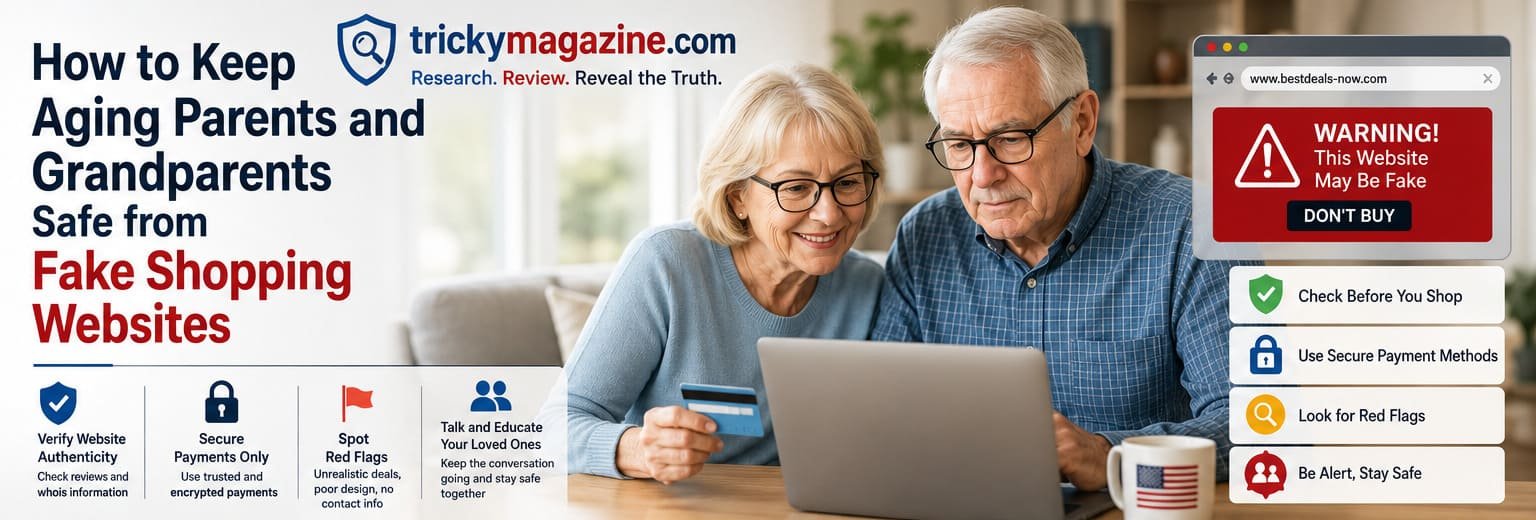
Every year, millions of Americans lose money to fake online shopping websites. But one group is targeted more than any other — seniors. According to the FBI’s Internet Crime Complaint Center (IC3), Americans over the age of 60 reported losing over $3.4 billion to internet scams in 2023 alone, with online shopping fraud ranking among the top complaint categories.
If you have aging parents or grandparents who shop online, this is not a scare tactic — it is a real and growing threat. Scam shopping websites are becoming increasingly sophisticated, and they are deliberately designed to fool even cautious buyers. The good news is that with the right knowledge and a few practical steps, you can dramatically reduce the risk of your loved ones falling victim.
This guide is specifically written for families who want to protect their elderly relatives from the wave of fake shopping websites currently targeting US consumers.
Why Are Seniors Targeted by Fake Shopping Sites?
Before diving into the solutions, it is important to understand why scammers specifically target older adults. It is not because seniors are less intelligent — it is because of a combination of behavioral and circumstantial factors that scammers deliberately exploit.
Greater trust in online advertising. Many seniors grew up in an era where advertisements in print and on television were regulated and generally trustworthy. That same trust can carry over to online ads, even when those ads are running completely unverified scam stores on Facebook, Instagram, or TikTok.
Less familiarity with red flags. Knowing that a domain registered three weeks ago is suspicious, or that a “too good to be true” price is a major warning sign, requires a level of digital literacy that many older adults simply have not had reason to develop.
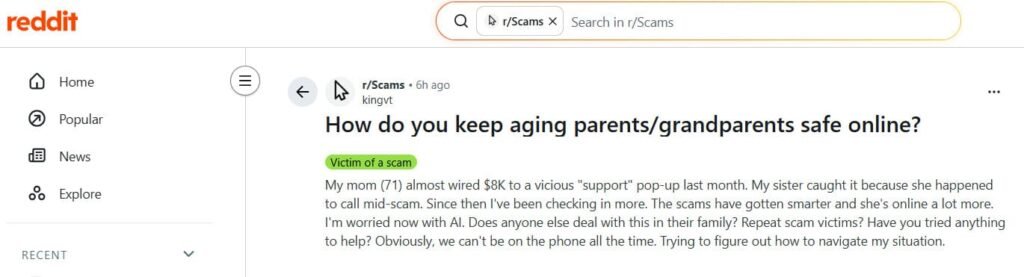
Online shopping during off-hours. Seniors who live alone or have limited mobility often shop online late at night or during quiet periods when family members are not around to offer a second opinion. Scammers know this and time their ad pushes accordingly.
Fixed incomes and retirement savings. For many seniors, their savings represent decades of hard work. Scammers use this against them by offering dramatic discounts on brand-name products, knowing that a retiree on a fixed income is more likely to be drawn to a deal that seems almost too good to believe. Also you can daily check about scam website list on Tricky Magazine website.
The Most Common Scam Shopping Tactics Used Against Seniors
Fake shopping sites targeting US seniors tend to follow recognizable patterns. Knowing these patterns is the first line of defense.
The Facebook and Instagram Ad Trap. Scammers run polished-looking social media ads featuring products at 60–90% off. These ads often feature stolen product photos from legitimate retailers like Amazon or major brand websites. One click leads to a convincing-looking storefront that is entirely fake.
Brand Impersonation. Many scam sites steal the branding of well-known US companies — using near-identical logos, color schemes, and product names to appear as an official outlet or clearance store for a trusted brand. Seniors who recognize a familiar logo are far less likely to question the site’s legitimacy.
Fake Urgency and Countdown Timers. “Only 3 left in stock!” or a ticking countdown clock creates artificial pressure that pushes buyers to skip their usual checks and complete a purchase quickly. This tactic is especially effective on seniors who fear missing out on a deal.
Lookalike Domain Names. Scam sites register URLs that are close to legitimate ones — for example, replacing a letter, adding a word like “outlet” or “official,” or using a different extension such as .shop or .store instead of .com. At a glance, these URLs can fool anyone.
Fake Reviews and Testimonials. Most scam shopping sites feature glowing five-star reviews that were either fabricated or copied wholesale from other sites. These reviews are often posted within days of the site launching and contain suspiciously similar language. You can learn more about How Fake Shopping Websites Really Work
Practical Steps to Protect Your Aging Parents Online
1. Have an Open, Non-Judgmental Conversation
The single most effective thing you can do is talk to your parent or grandparent about online shopping scams — without making them feel foolish or patronized. Many seniors avoid mentioning suspicious websites or purchases to family members because they fear being told “I told you so” or having their independence questioned.
Approach it as sharing information, not issuing warnings. Say something like, “I’ve been reading about these fake shopping websites that are tricking a lot of people — even really savvy shoppers. Can I show you a few things to watch out for?” This framing invites collaboration rather than triggering defensiveness.
2. Teach the WHOIS Check
One of the most reliable ways to spot a scam shopping site is checking its domain registration date. A legitimate retailer does not pop up overnight. Sites like whois.domaintools.com allow anyone to type in a web address and see exactly when it was registered.
If a site claiming to be an established US brand has a domain registered in the last six months, that is a serious red flag. Walk your parent through this process once, and you give them a tool they can use independently every time they encounter an unfamiliar site.
3. Set Up a “Second Opinion” System
Agree with your aging parent that before making any purchase from a website they have not used before, they will text or call you first. Frame this not as surveillance but as a team approach — “I love finding good deals too, so let me help you check if it’s legit before you buy.”
If you are not immediately available, set up a simple rule: if they are unsure, they wait 24 hours before purchasing. Most scam site urgency tactics rely on impulse buying. A 24-hour pause breaks that cycle entirely.
4. Show Them How to Reverse Image Search Product Photos
Scam shopping sites almost universally use stolen product images. Teaching your parent to right-click an image and select “Search image on Google” (or use Google Lens on a phone) can instantly expose a fake store. If the same product image appears on 20 different websites — or on AliExpress for a fraction of the price — that is a clear signal something is wrong.
5. Bookmark Trusted Retailers
Create a bookmark folder on your parent’s browser with the websites they regularly shop from — Amazon, Walmart, Target, Macy’s, and any others they trust. Encourage them to start every shopping session from that bookmark folder rather than clicking links from emails or social media ads.
This one habit alone eliminates a massive percentage of scam exposure, since most fake shopping sites reach victims through social media ads and phishing emails rather than organic search.
6. Check Reviews on Independent Sites
Fake shopping sites manufacture their own on-site reviews. But independent platforms like Trustpilot, Sitejabber, and Better Business Bureau (BBB) are harder to manipulate. Show your parent how to search “[website name] reviews” on Google and look for results from these third-party platforms.
Sites like trickymagazine.com specifically research and expose fake US shopping sites, making it a valuable bookmark for any family member wanting to verify an unfamiliar retailer before buying.
7. Enable Purchase Alerts on Their Bank Account or Credit Card
Most US banks and credit card providers offer real-time text or email alerts for every transaction. Setting this up means that if a fraudulent charge does go through, it is caught within minutes rather than at the end of a billing cycle. Walk your parent through enabling these alerts — it takes less than five minutes and provides enormous peace of mind.
Additionally, if your parent uses a credit card rather than a debit card for online purchases, chargebacks are significantly easier to process in cases of fraud.
8. Install a Browser Extension for Scam Detection
Several free browser extensions can flag suspicious websites before your parent even lands on them. ScamAdviser, Web of Trust (WOT), and Bitdefender TrafficLight all provide real-time warnings when a user navigates to a site with a poor trust score or known scam history. Installing one of these on your parent’s computer adds an automatic layer of protection that does not require them to do anything differently. You can also file complaint on An official website of the United States government
Warning Signs Your Parent May Have Already Been Scammed
Even with the best precautions, scams sometimes succeed. Watch for these signs that a family member may have fallen victim to a fake shopping site:
- They mention ordering something weeks ago that still has not arrived
- They receive a package containing cheap, low-quality items that look nothing like what was advertised
- They report that a website or email address has gone dark after their purchase
- Unexpected charges appear on their bank or credit card statement
- They seem embarrassed or evasive when asked about a recent online purchase
If you suspect a scam has already occurred, act quickly. Contact the bank or credit card provider to dispute the charge, file a complaint with the FTC at reportfraud.ftc.gov, and report the site to the FBI’s IC3 at ic3.gov.
The Bigger Picture: Staying One Step Ahead of Scammers
Fake shopping websites are not a static problem. Scammers constantly adapt — launching new sites when old ones are exposed, copying the branding of whatever products are trending, and refining their tactics based on what works. Protecting your aging parent is therefore an ongoing conversation, not a one-time fix.
Make it a habit to occasionally check in about their online shopping activity — not to police them, but to stay current. Share articles and warnings about new scam sites when you come across them. And remind them that being targeted by a scam is not a reflection of their intelligence — it is a reflection of how sophisticated and deceptive these operations have become.
The scammers rely on silence and shame. The best protection is open, regular, judgment-free conversation between families.
Final Thoughts
Your aging parents and grandparents deserve to enjoy the convenience of online shopping without fear. By combining digital literacy, practical tools, and ongoing family communication, you can make it significantly harder for scam shopping websites to reach them — and much easier to catch and recover from any attempt that does slip through.
Stay informed, stay connected, and keep checking resources like trickymagazine.com to stay up to date on the latest fake shopping sites targeting US consumers.
Have you spotted a suspicious shopping website targeting seniors? Share it with us at daniel17wilson007@gmail.com and we’ll investigate and publish a full review to warn other shoppers.ShareProject contentTricky MagazineCreated by youAdd PDFs, documents, or other text to reference in this project.
3 thoughts on “How to Keep Aging Parents and Grandparents Safe from Fake Shopping Websites”
Comments are closed.