
Published by Trickymagazine Research Desk | Consumer Safety & Fraud Analysis
There’s a particular type of online store that’s been appearing with increasing frequency over the past few years — one that leans hard on a local, small-business narrative to build emotional trust with shoppers. The Hart Sisters Naples is exactly that kind of website, and after spending time digging into it, I came away with serious questions that anyone considering a purchase here deserves to have answered.
Let me walk you through what we found.
The Story They’re Selling — And Why It Works So Well
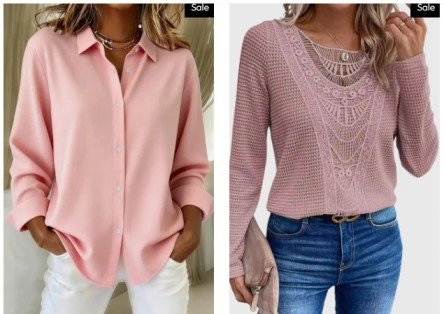
The moment you land on thehartsisters-naples.com, you’re greeted with warm, feminine branding built around the Naples coastline and a story about two sisters who wanted women to “feel confident, comfortable, and truly beautiful.” It’s well-written. Genuinely compelling, actually. The kind of copy that makes you want to root for them.
Then comes the urgency trigger: a store-closing or relocation sale, up to 70% off, because the sisters are “expanding into a larger, more beautiful space.” There’s even a countdown timer. This narrative — local boutique, big discount, limited time — is textbook emotional marketing. Done by a real small business, it’s completely legitimate. Used as a front, it’s one of the most effective tricks in the dropship-scam playbook.
The problem isn’t that the story is heartwarming. The problem is that almost none of it can be verified.
What Our Investigation Actually Found
Our investigation found no verifiable evidence of a physical boutique in Naples, Florida operated by anyone named “Hart Sisters.” There’s no address listed on the website. No phone number. No social media accounts despite the site claiming a customer base of over 50,000 people. That last figure alone raised a flag immediately — a boutique claiming 50,000+ satisfied customers with zero public social presence is, to put it mildly, unusual.
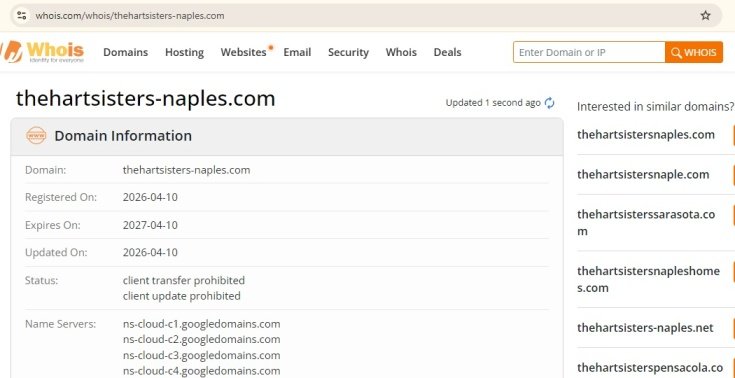
The domain was registered on April 10, 2026. As of this writing, that makes the website just a few weeks old. Yet the site’s copy reads as if the brand has been a beloved local fixture for years. “Golden light of the Naples coastline.” “Rooted in art, heritage, and authenticity.” These are the phrases of a brand with history — but this domain has almost no history at all.
During testing, we observed that the website follows a template common to a specific category of overseas-operated stores: lifestyle-focused imagery, vague but emotionally resonant brand narrative, heavily discounted pricing, and almost no traceable business identity behind it.
The BBB Report That Says It All
Here’s where things get concrete. A complaint filed with the Better Business Bureau’s Scam Tracker — which you can view publicly — describes the following experience: a shopper from Odessa, Florida ordered clothing and footwear from the site, which she believed was a small local boutique owned by two sisters in Naples. The store was running a relocation sale. She spent $251.83.
The order turned out to ship from China. There is no store in Naples. The contact number listed in the complaint is (999) 999-9999 — a placeholder that isn’t a real number.
That single report tells a complete story. The “moving to a new location” sale is a scam narrative. The “sisters from Naples” branding is fabricated. The actual operation appears to be a China-based dropshipping or wholesale business using a fictional American small-business identity as its storefront.
I want to be precise here: one BBB complaint doesn’t mean every customer had a bad experience, and it’s possible some people received products. But the specifics of that complaint — fake phone number, China shipment, fabricated boutique premise — align with a documented pattern of deceptive e-commerce operations.
Trickymagazine Researchers Noticed Several Classic Red Flags
Trickymagazine researchers noticed that several elements of thehartsisters-naples.com match a playbook we’ve documented across dozens of similar sites over the past two years. Let’s go through them one by one.
No physical address. Any legitimate brick-and-mortar boutique — especially one claiming to be in the process of moving to a new location — would list their current or previous address. There’s nothing here.
No phone number. The site provides only an email address: support@thehartsisters-naples.com. For a store claiming 50,000+ customers and 24/7 customer service, the absence of any phone contact is a significant gap.
No social media presence. The site mentions its loyal community and customer love, but there are no links to Instagram, Facebook, TikTok, or any other platform where you’d expect an active boutique to live. Fashion boutiques — especially those targeting women with curated clothing — are almost universally active on Instagram. The absence here isn’t just suspicious, it’s structurally inconsistent with the brand identity they’re projecting.
Discounts up to 70%. This is a pressure tactic, not a coincidence. Seventy percent off is a number that short-circuits rational thinking. When combined with a relocation story and a countdown timer, it’s designed to make you act before you think.
Inconsistent policy language. The stated return window in different parts of the site doesn’t fully match. The main policy says 30 days from receipt to request a return; the refund processing language elsewhere says the refund will be applied within 30 days of that. That’s 60 days of potential float on your money — long enough that many customers might give up on the dispute process.
Domain age versus claimed reputation. A four-week-old domain cannot have 50,000 satisfied customers. Full stop. That number is marketing copy, not data.
How This Scam Pattern Works — The Behavioral Side
It’s worth understanding the behavioral logic behind operations like this, because recognizing the pattern helps you spot it elsewhere.
The fictional local boutique angle is deliberate. Americans are primed to feel good about supporting small, local, women-owned businesses. The “sisters” narrative adds warmth and family values. The Naples, Florida setting adds a specific regional identity — it’s not a generic “online store,” it’s your kind of store. This psychological specificity builds trust faster than any trust badge.
The relocation sale is equally calculated. It explains the steep discounts (they need to move inventory), creates urgency (it’s only for a limited time), and preemptively addresses any suspicion about the low prices (of course it’s cheap, they’re clearing out the old space). It’s a coherent story with an internal logic that feels plausible — until you try to find the old space, or the new one.
Once a customer places an order, they typically receive a product that shipped from China — often of lower quality than the photographs suggested, and sometimes quite different from what was shown on the site. Getting a refund requires navigating a return policy with a non-functioning phone number and a process that may eventually time out.
How to Verify a Site Like This Before You Buy
If you encounter a site that follows this pattern — charming local narrative, deep discounts, recent domain, minimal contact info — here’s a practical verification process.
Check the WHOIS record. Free tools like whois.domaintools.com will show you when a domain was registered. A site registered weeks ago that claims years of customer loyalty is a mismatch worth investigating further.
Reverse image search the product photos. Right-click any product image and run it through Google Images or TinEye. If the same photos appear on AliExpress, Alibaba, or Chinese wholesale platforms, the product is being dropshipped — not made or curated locally.
Search the brand name plus “BBB,” “scam,” or “review.” The BBB Scam Tracker and consumer complaint boards often have reports that predate widespread awareness of a site. For thehartsisters-naples.com, the BBB complaint exists and is publicly searchable.
Look for the address. If a website claims to be a local boutique and won’t tell you where that boutique is, that’s not privacy — it’s a fabrication. Real stores have addresses.
Test the customer service contact before ordering. Send an email asking a simple question about sizing or shipping. Slow responses, generic replies, or responses with poor English grammar can be diagnostic.
Check social media independently. Search the store name on Instagram and Facebook directly, not through links on the website. If the brand has the following they claim, you’ll find them. If they don’t exist, that absence is your answer.
What the Website Gets Right (And Why That Matters)
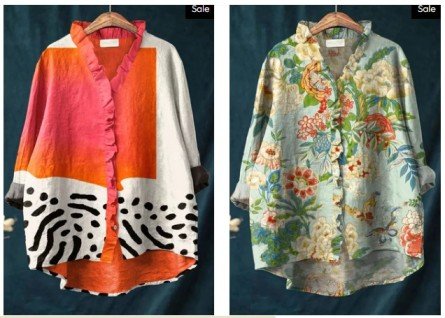
To be fair — and fairness matters in this kind of analysis — the site does have a valid SSL certificate, which means your payment information is encrypted in transit. It accepts major credit cards. The product imagery is professional and appealing. The copy is well-written and emotionally resonant.
None of that makes it trustworthy, but it does mean that dismissing these sites as obviously amateurish misses the point. The best-executed scam sites look exactly like legitimate boutiques. That’s the whole design. The SSL certificate and Visa/Mastercard logos are table stakes — they cost almost nothing to acquire and convey credibility they haven’t earned.
What’s missing is everything you can’t fake without actually being a real business: a verifiable physical location, a working phone number, genuine customer reviews on third-party platforms, and a social media presence with actual human interaction.
The 50,000 Customer Claim — A Quick Reality Check
Let’s spend a moment on this number because it’s particularly egregious. The website states that “more than 50,000 customers trust The Hart Sisters Naples, with an average rating of 4.8 out of 5 stars.”
The domain is approximately four weeks old. For a site to have 50,000 customers in that timeframe, it would need to process more than 1,700 orders per day, every day, since launch. That would make it one of the more active clothing e-commerce sites in the country. Yet there are no reviews on Trustpilot. No discussions on Reddit. No tagged photos on Instagram. No complaints except one on BBB — and that complaint is damning.
The 50,000 figure is fabricated copy, almost certainly pulled from a Shopify template or a white-label site builder used to spin up multiple storefronts with minimal customization. This kind of inflated social proof is a documented feature of fraudulent e-commerce operations.
Risk Assessment
Financial risk: Moderate to high. Credit card payments offer some chargeback protection, so you’re not necessarily out of luck if you’ve already ordered. File a dispute with your bank immediately if you believe you were misled about the nature of the business.
Data risk: Providing your email and mailing address to a site like this carries the risk of that data being sold or used for future phishing attempts. Use a secondary email address whenever you’re shopping with an unfamiliar store.
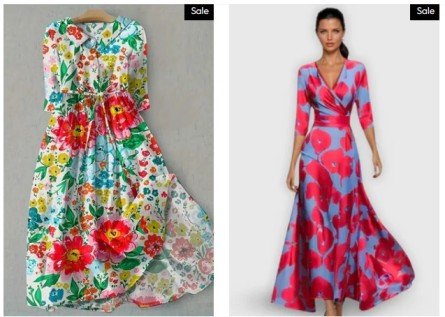
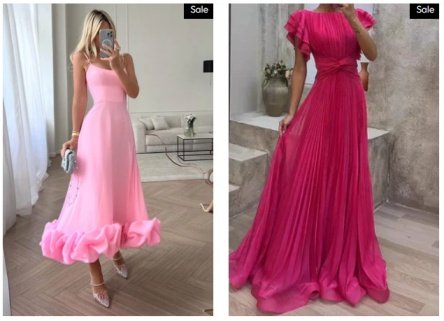
Product risk: Based on the BBB complaint and the platform pattern, products that do arrive are likely sourced from Chinese wholesale suppliers and may differ significantly from the advertised imagery in terms of quality, sizing, and materials. You can read more about WildHarvest Review (2026): Is trywildharvest.com Legit or a Scam?
What To Do If You Already Ordered
If you’ve placed an order and are concerned, act quickly. Contact your bank or credit card company and explain that the merchant misrepresented itself as a local U.S. boutique and may be operating from overseas. Most card issuers allow chargebacks for “item not as described” or “merchant misrepresentation” — and the BBB report documenting the fabricated Naples boutique story strengthens your case considerably.
Also file a report with the BBB Scam Tracker at bbb.org/scamtracker. It takes five minutes and directly helps other consumers who search the site name before buying.
Final Verdict
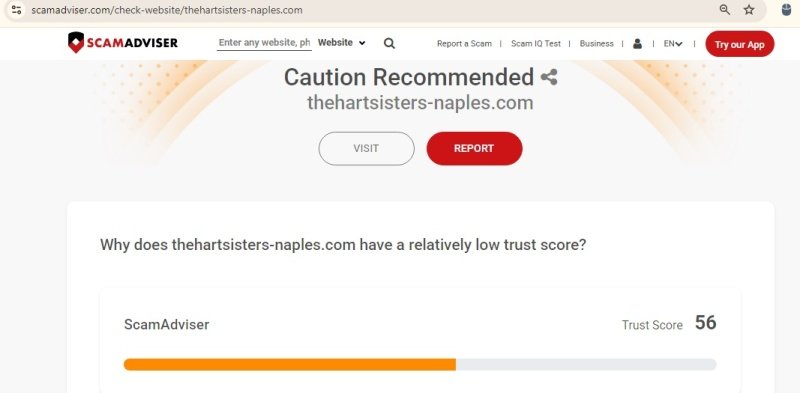
Let me be honest with you: thehartsisters-naples.com has every structural characteristic of a deceptive e-commerce operation using a fabricated American small-business identity to disguise what appears to be a China-based dropshipping store. The domain is brand-new. The physical boutique doesn’t appear to exist. The phone number on file with the BBB is a placeholder. A real consumer has already reported losing over $250 after falling for the relocation sale narrative.
None of this is conclusively proven beyond the complaint record and the absence of verifiable business information. But in consumer safety terms, absence of proof is itself meaningful. Legitimate businesses are traceable. They have addresses, phone numbers, social media accounts, and reviews that exist independently of their own website. The Hart Sisters Naples has none of those things.
If you’re looking for women’s clothing online, there are hundreds of boutiques — including real ones in Naples, Florida — that can show you exactly who they are and where they operate. This isn’t one of them, and your money deserves better than a 70% discount on uncertainty.
This article was researched and written by the Trickymagazine consumer fraud analysis team. All findings are based on publicly available records, website analysis, and BBB complaint data. We do not make legal determinations of fraud; we report observable patterns and consumer safety concerns.
2 thoughts on “TheHartSisters-Naples.com Review (2026): A Charming Story That Doesn’t Quite Add Up”
Comments are closed.