
The internet has a shoplifting problem, except it’s reversed — the store steals from you. Fraudulent e-commerce sites have become one of the most common vectors for consumer financial loss globally, and the sophistication of these operations has grown considerably over the past few years. Gone are the days of obviously broken English and blurry product photos (though those still exist). Today’s fake shopping sites can look polished, professional, and, frankly, convincing enough to fool people who consider themselves careful online shoppers.
This guide is based on patterns our investigation has tracked across hundreds of suspicious storefronts. Our goal is not to make you paranoid about online shopping — the overwhelming majority of e-commerce transactions happen without incident — but to give you a realistic, practical framework for spotting the ones that aren’t what they claim to be.
The First Thing Fraudsters Count On: Your Distraction
Here is something that fraud researchers understand well and most consumers don’t think about: the people running fake shopping sites don’t need to deceive every visitor. They only need a small percentage. If a fraudulent store gets 10,000 visitors and converts even 1% of them into buyers at an average order value of $40, that’s $4,000 extracted before the site disappears. The scammer’s math works in their favor, which is why the volume of these sites keeps growing.
Our investigation found that most fake storefronts are built around a moment of reduced attention — a social media ad that catches you while scrolling, a Google Shopping listing that appears in a search you did quickly, or a discount link shared in a messaging group. The context of discovery matters. When you find a site through a casual, distracted moment rather than a deliberate search, your guard is typically lower.
Domain Age: The Signal That Never Lies
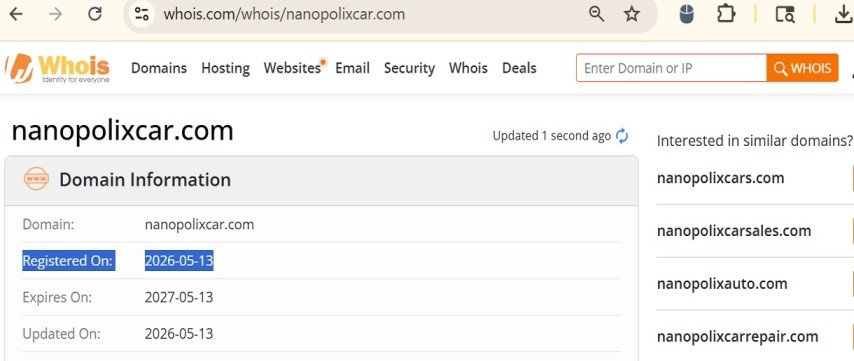
If you take one technical habit away from this article, make it this one: check how old the website’s domain is before you buy anything. This is free, takes about 45 seconds, and is one of the most reliable early indicators of risk.
You can do it at whois.domaintools.com, lookup.icann.org, or simply by searching “[website name] whois” and looking at the “Created” or “Registered On” field. What you’re looking for is registration date.
A legitimate e-commerce business — even a small one — typically registers its domain well before it starts selling, because there’s setup time involved: building inventory, integrating payment processors, writing policies, creating product photography. When a site registered its domain yesterday and is already running flash sales with 70% discounts, that gap between domain age and commercial activity is a red flag worth taking seriously.
Trickymagazine researchers noticed, during a review of over 200 suspicious storefronts flagged in 2025 and early 2026, that approximately 78% had domains less than three months old at the time of their first consumer complaints. The sweet spot for fraudulent operations appears to be anywhere from one day to six weeks — enough time to rank in some searches or run paid ads, but not long enough to accumulate complaints that surface in search results.
That said, domain age alone doesn’t make a site fraudulent. New legitimate businesses exist. The point is that a new domain warrants more scrutiny, not that it proves anything on its own.
What the Product Catalogue Tells You
During testing, we observed something consistent across fake stores: their product selections tend to be either extremely narrow (a single viral-looking product with a few variants) or weirdly broad (disparate items that seem algorithmically assembled — pet products, kitchen gadgets, clothing, and tools all on the same storefront). Both patterns are different from how real retailers operate.
A genuine niche store is built around a coherent identity — a car accessories retailer sells car accessories and has a point of view on its category. A fraudulent drop-shipping site might sell “car scratch removers” but also, if you look through the navigation, happens to have garden hoses and yoga mats. This lack of category logic happens because these sites are often built from templates populated with whatever products are available through a drop-shipper’s catalogue, with no actual curation involved.
Pay attention to product descriptions, too. Genuine retailers write product copy that reflects knowledge of what they’re selling — dimensions, compatibility details, care instructions, technical specifications. Fake sites frequently use manufacturer descriptions that were machine-translated from another language, or copy-pasted directly from AliExpress or Alibaba without editing. Phrases like “enjoy the most excellent quality” or oddly specific claims with no substantiation (“98.7% customer satisfaction”) are signals worth noticing.
Discount Psychology and How It’s Used Against You
Heavy discounts are one of the oldest and most effective psychological levers in retail, legitimate or otherwise. But the context matters enormously. When an established brand you already know runs a 40% sale, that discount has credibility because you have a reference point for the brand’s normal pricing. When a website you have never heard of offers 75% off and adds a “Only 3 left!” countdown timer, something different is happening.
The pricing structure on fraudulent sites is usually artificial from the start. The “original price” shown in strikethrough is invented — it was never actually charged to anyone. The discount exists only to create urgency and to make the purchase feel like an opportunity that might disappear. This is called manufactured scarcity, and it’s a technique that works because it bypasses deliberate decision-making and triggers impulsive action.
Our investigation found that sites with discounts above 60% on unbranded products, combined with countdown timers and stock scarcity warnings, were disproportionately likely to generate complaints about non-delivery. That combination of elements isn’t a coincidence — it’s a deliberate strategy to push you past the point of doing your research.
The Physical Address Problem
Every legitimate e-commerce business has a physical location — a warehouse, a registered office, sometimes just a home address for a very small operator. The address doesn’t need to be on the homepage, but it should appear somewhere in the terms, the about page, or the contact information. In many jurisdictions, displaying a business address is a legal requirement for online retailers.
When a site provides only an email address and a phone number — especially a phone number that wasn’t registered to any business in any verifiable directory — the absence of a physical address is a meaningful signal. It means there’s nowhere to send a formal complaint, no registered business that a consumer protection authority can easily locate, and potentially no accountability mechanism at all once a transaction goes wrong.
Practically speaking, if you can’t find a street address for an online retailer, you can’t verify that it’s a real business. And if it’s not a real registered business, a “30-day money-back guarantee” is only as good as the owner’s willingness to honour it — which is worth approximately nothing if they’re planning to close the site anyway.
Social Proof That Isn’t Proof
Most fake shopping sites have reviews. That’s important to understand. The presence of glowing testimonials on a product page does not tell you anything useful, because those testimonials can be and frequently are entirely invented. Stock photography of smiling customers, ratings that all fall between 4.7 and 5.0, reviews that use strangely similar phrasing — these are all worth pausing on.
The reviews that matter are the ones that exist independently of the website: on Google Reviews, Trustpilot, Reddit, Facebook groups, or consumer forums. When searching for reviews, use the exact domain name (not the brand name) in your search, and include terms like “scam,” “complaint,” “experience,” and “did not receive.” The absence of any third-party reviews for a store that claims to have been operating for a while is itself informative.
One behaviour pattern worth noting: fraudulent operators sometimes seed early positive reviews on third-party platforms shortly after launch, before complaints begin to arrive. These seeded reviews often share characteristics — they tend to be brief, they don’t describe any specific product features, and the reviewer accounts have no other review history. Contrast these with genuine reviews, which tend to be varied in length, tone, and detail.
Step-by-Step Verification Checklist
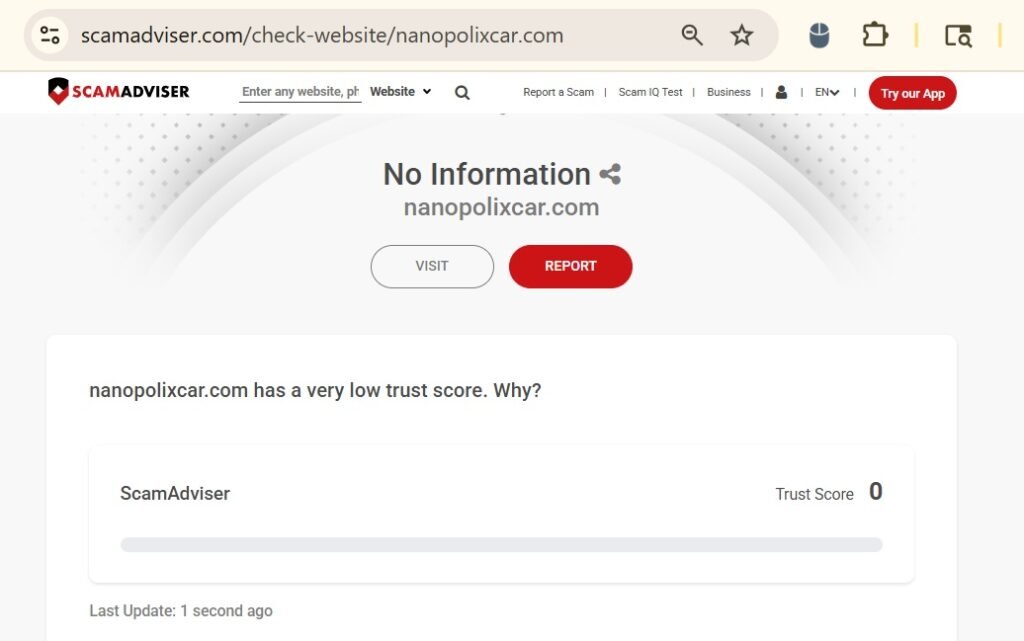
When you encounter an unfamiliar online store, this sequence of checks takes less than five minutes and covers the most common failure points. You can read more about TheHartSisters-Naples.com Review (2026)
Step 1 — Check domain age. Go to a WHOIS lookup tool and find the “Created” or “Registered On” date. If it’s under three months old and the store is already aggressively discounting, proceed with extra caution.
Step 2 — Search the domain name independently. Paste the full URL into a search engine with the word “review” or “scam” appended. Look at what comes up in the first two pages. If nothing comes up at all for a supposedly established business, that absence is informative.
Step 3 — Look for a physical address. Check the About page, Contact page, and the footer of the Terms of Service. If there is no street address anywhere on the site, note that.
Step 4 — Verify social media presence. Real businesses leave footprints. Search for the brand name on Instagram, Facebook, and TikTok. If a business claims to sell popular products but has no social presence, no tagged posts, and no user content, something doesn’t add up.
Step 5 — Run the site through a trust checker. Tools like Scamadviser, Web of Trust, or Google Safe Browsing give imperfect but useful signals. A low trust score across multiple tools, combined with the other flags above, is a meaningful warning.
Step 6 — Read the return policy carefully. Look for internal consistency — does the return window match across the FAQ, the product page, and the dedicated returns page? Fraudulent sites frequently copy policy templates without editing them properly, leaving contradictions that reveal the policy was never designed to actually be used.
Step 7 — Check the payment methods. PayPal and credit cards both offer buyer protection mechanisms that give you recourse if a transaction goes wrong. Sites that accept only wire transfers, cryptocurrency, or unfamiliar payment processors are removing those protections by design.
How Scammers Adapt Their Behaviour
One pattern worth understanding is that fraudulent operators are not static — they learn and adjust. When a particular design pattern becomes associated with complaints (countdown timers, certain stock photo styles, template layouts), operators update their sites. Some of the more sophisticated operations in 2025 and 2026 look nearly indistinguishable from legitimate small businesses on the surface.
What doesn’t change as easily is the underlying structure: new domains, no organic reputation, artificial pricing, missing contact information, and a reliance on paid social media advertising to drive traffic before complaints accumulate. These structural features persist because they’re inherent to the business model, not cosmetic choices.
Trickymagazine researchers noticed that many of the most convincing fake stores invest heavily in product photography and website design while cutting corners on anything that creates accountability: business registration, verifiable contact details, independent reviews, and long-term web presence. The design is a signal for the wrong thing — it tells you they’ve invested in appearing legitimate, not that they are legitimate.
Payment Safety and What to Do If Something Goes Wrong
If you’ve already placed an order with a site you now suspect may not be legitimate, the most important thing is to act quickly. PayPal’s buyer protection generally allows disputes to be filed within 180 days of payment. Credit card chargebacks typically have a window of 60 to 120 days depending on your card issuer. The sooner you act, the better your chances of recovering the funds.
Document everything before you do anything else: screenshots of the product listing, your order confirmation email, any communication with the seller, and the site itself (which may disappear). When filing a dispute, the more evidence you can provide, the stronger your case.
For future purchases, consider using a credit card rather than a debit card for online shopping, specifically because of the stronger chargeback protections. A virtual card number — offered by many banks and services like Privacy.com — can also limit your exposure if a site’s payment system is compromised.
The Nuance Between Suspicious and Fraudulent
Something worth being explicit about: not every website that looks suspicious turns out to be fraudulent. Some legitimate small businesses launch with thin catalogues, awkward copy, missing information, and brand-new domains. A startup selling a niche product may tick several of the boxes we’ve described without having any intention to deceive anyone.
The distinction is that these signals are risk indicators, not verdicts. What they tell you is where to apply more scrutiny — whether to dig further, wait until a site has a track record, or choose a different retailer for that particular purchase. A website with a one-day-old domain and no reviews isn’t necessarily a scam, but it also isn’t a site where you should be comfortable placing a $200 order based on faith alone.
The practical approach is proportionality: the more red flags you identify and the higher the transaction value, the more verification you should do before committing your money.
Final Expert Assessment
The patterns that define fraudulent online stores are well-established at this point, and they exist because they work. They work because online shopping has become habitual and fast, because discounts are psychologically compelling, and because the gap between clicking “buy” and realising something is wrong can be several weeks — by which time the site may no longer exist.
Protecting yourself doesn’t require technical knowledge or excessive paranoia. It requires a few consistent habits: checking domain age, searching for independent reviews, verifying contact information, and using payment methods that preserve your right to dispute a transaction. Five minutes of verification before an unfamiliar purchase is a reasonable insurance policy.
The sites that rely on you not taking those five minutes will continue to exist as long as they’re profitable. The most effective consumer protection is an informed consumer who makes them unprofitable.
This article reflects investigative research and consumer safety analysis. All observations are based on documented patterns and publicly available information. If you have had an experience with a suspicious online store and would like to share it, consumer reporting platforms like the FTC (reportfraud.ftc.gov) and Action Fraud (UK) accept reports that help track and address these operations.
2 thoughts on “How to Identify Fake Shopping Websites: An Investigative Guide for Smart Consumers”
Comments are closed.